Ao Nang is where most Krabi trips begin — and where most visitors stay for all or most of them. It’s the hub: the tour operators, the restaurants, the 7-Elevens, the longtail pier to Railay and the island boats. The beach itself is a working harbour with average swimming, but that’s not why people base here. They base here because everywhere else in Krabi is easier to reach from Ao Nang than from anywhere else.
Get Ao Nang right and the rest of Krabi gets easier.
The short version
- The town runs along a single main road (roughly 2 km), with the beach and longtail pier at the north end and most of the guesthouses, restaurants and shops spreading south and inland.
- The beach is a working seafront with longtails on it — not a swimming beach. Good for a sunset stroll and a drink.
- Longtails to Railay and Phra Nang: ฿100 each way, roughly 8am–6pm, leave when 8 passengers gather. No booking needed.
- Songthaews to Krabi Town: ฿50–60, about 30 minutes, stop running around 6pm.
- Street food: Ao Nang Landmark is the dependable market evening; the night-market guide explains when the smaller weekly markets are worth considering.
- Scooters: from ฿250/day for a Honda Click 125 — useful for the northern beaches and Tiger Cave Temple.
- Who it suits: first-timers, families, island-hoppers and anyone who wants a wide range of accommodation and food without the logistical overhead of a boat-only beach.
How Ao Nang is laid out
Ao Nang sits on the Andaman coast about 21 km west of Krabi Town. The main road (Route 4203) runs roughly north–south, and it’s where you’ll spend most of your time. At the northern end it meets the beachfront promenade — the strip where tour-desk cafés, beach bars and seafood restaurants line up facing the water, with longtails pulled up on the sand below.
From the beach road, the town spreads south and inland along a loose grid of lanes that get quieter the further you go from the seafront. The biggest 7-Eleven sits on the main road near the beach junction. Banks and ATMs cluster within 200 metres of the beachfront. Pharmacies, laundry shops, budget guesthouses and local restaurants are all walkable.
Ao Nang is not a large town. You can walk from the south end of the main strip to the longtail pier in about 20 minutes. The neighbouring beach of Nopparat Thara — broader, quieter, and a launch point for some island tours — is 2 km west; most people get there by songthaew or scooter.
What makes Ao Nang feel bigger than it is: it sprawls. There are guesthouses and restaurants down lanes that look like nothing from the main road. Worth exploring a block back for lower prices and fewer crowds.
The beach: honest assessment
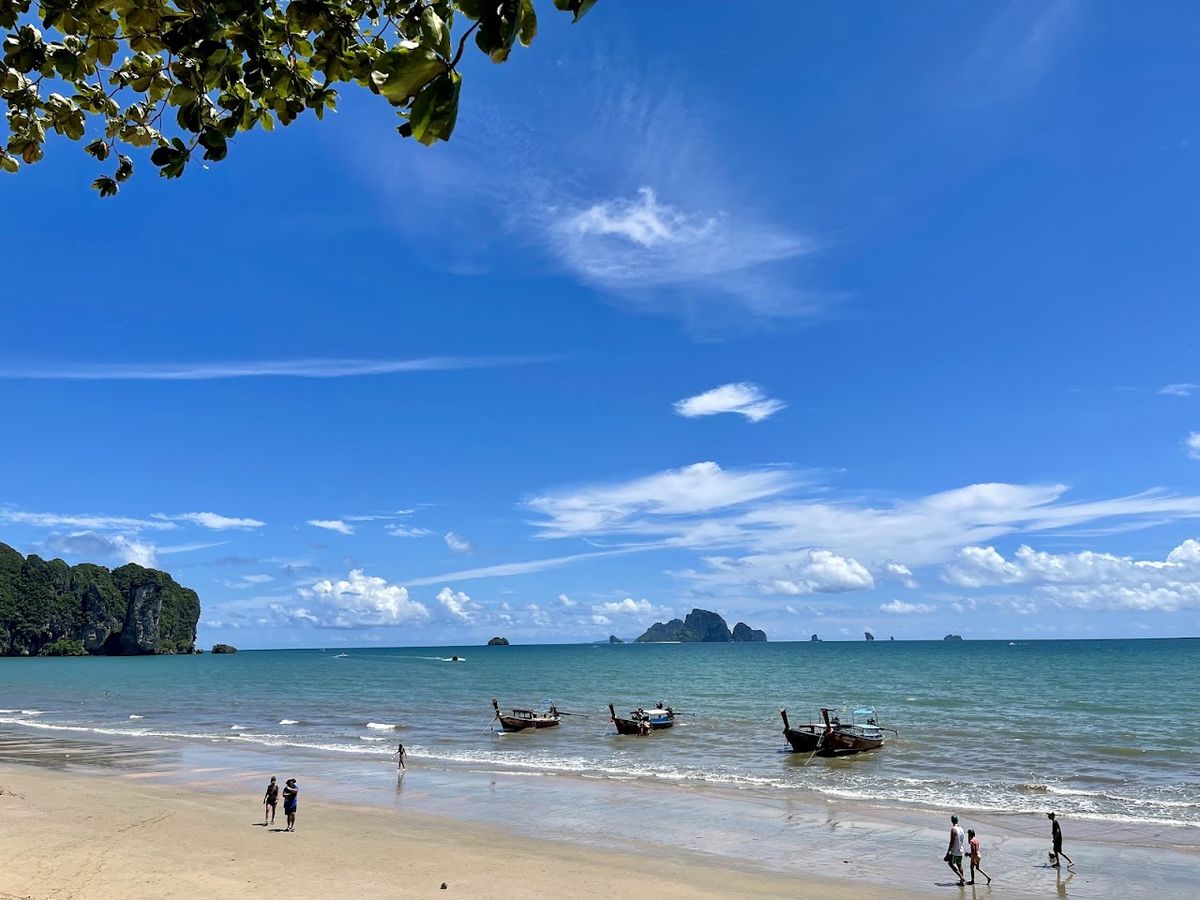
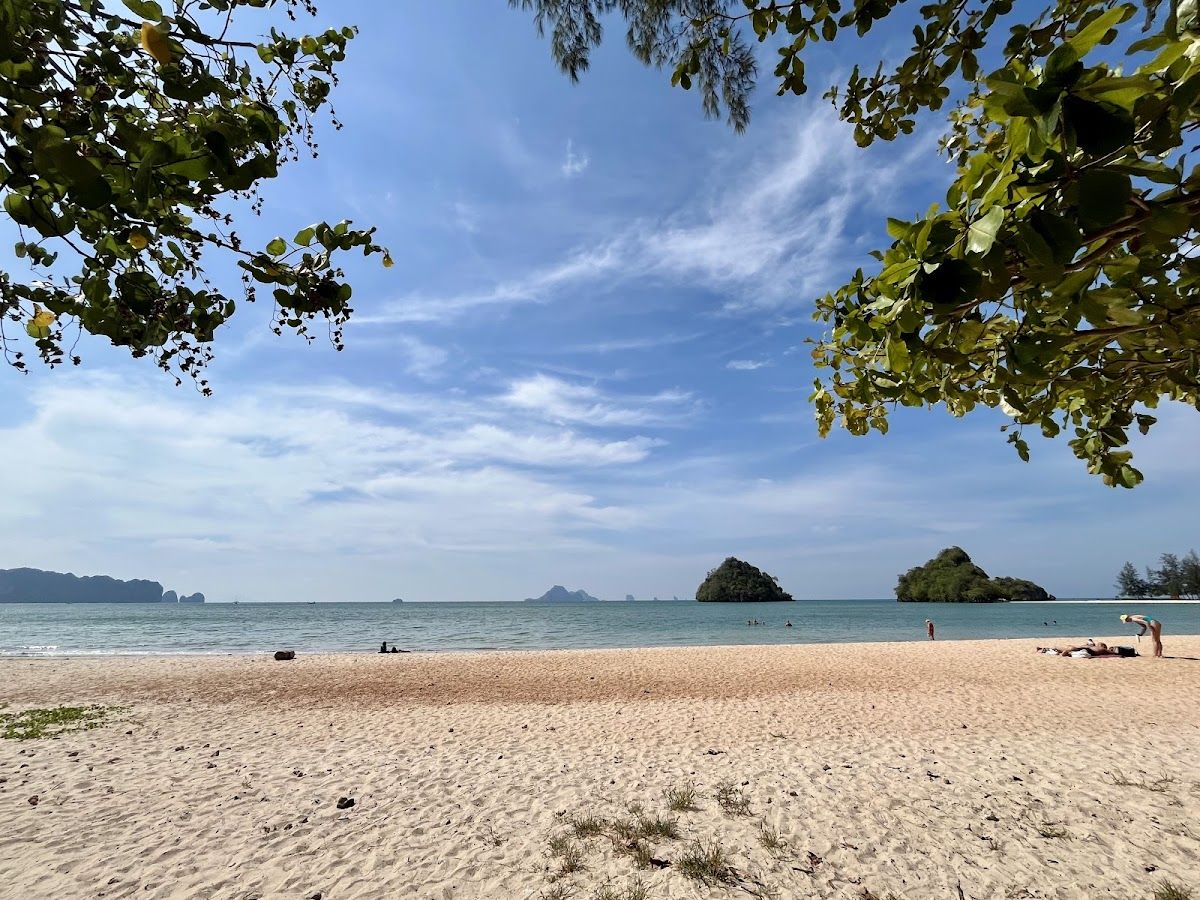
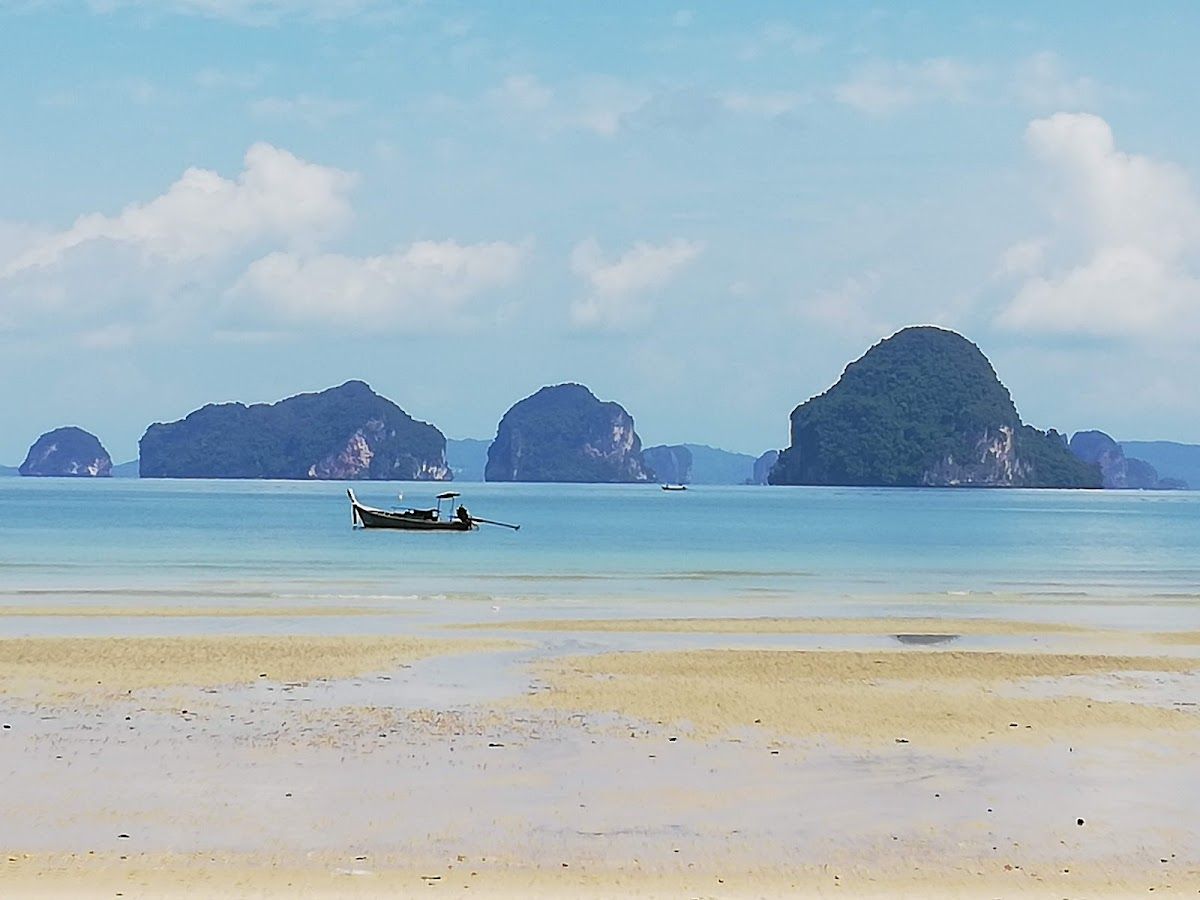
Ao Nang beach is a longtail harbour. At any given hour in high season there’ll be 30–50 longtail boats on the sand, their crews waiting for passengers. Swimming is possible but average — the water is murkier than the boat-only beaches and the longtail area is not ideal for it.
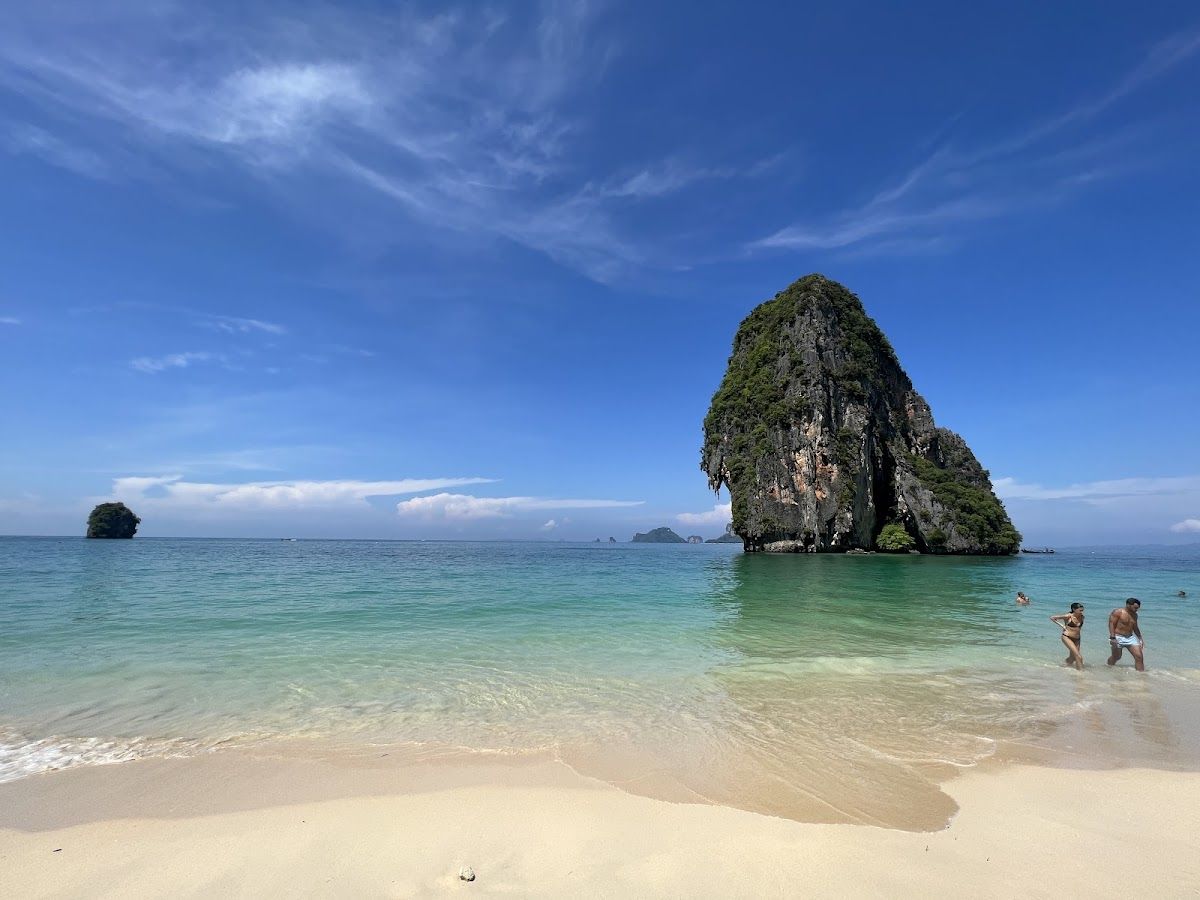
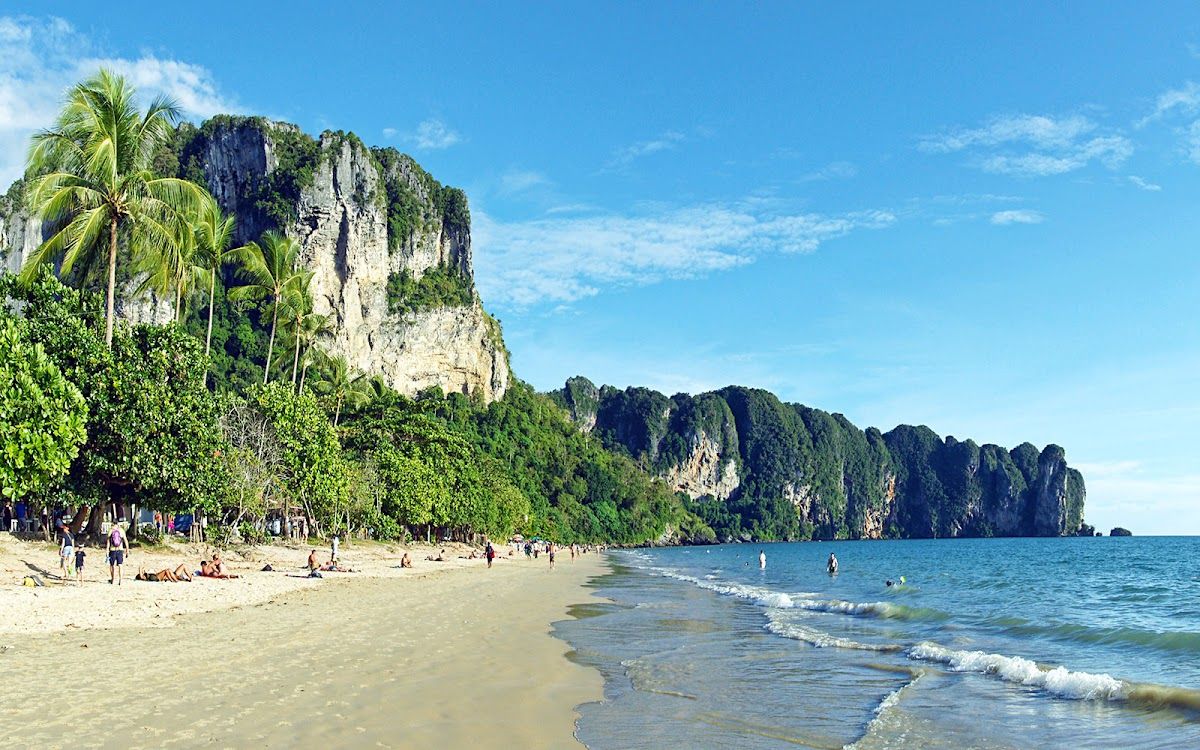
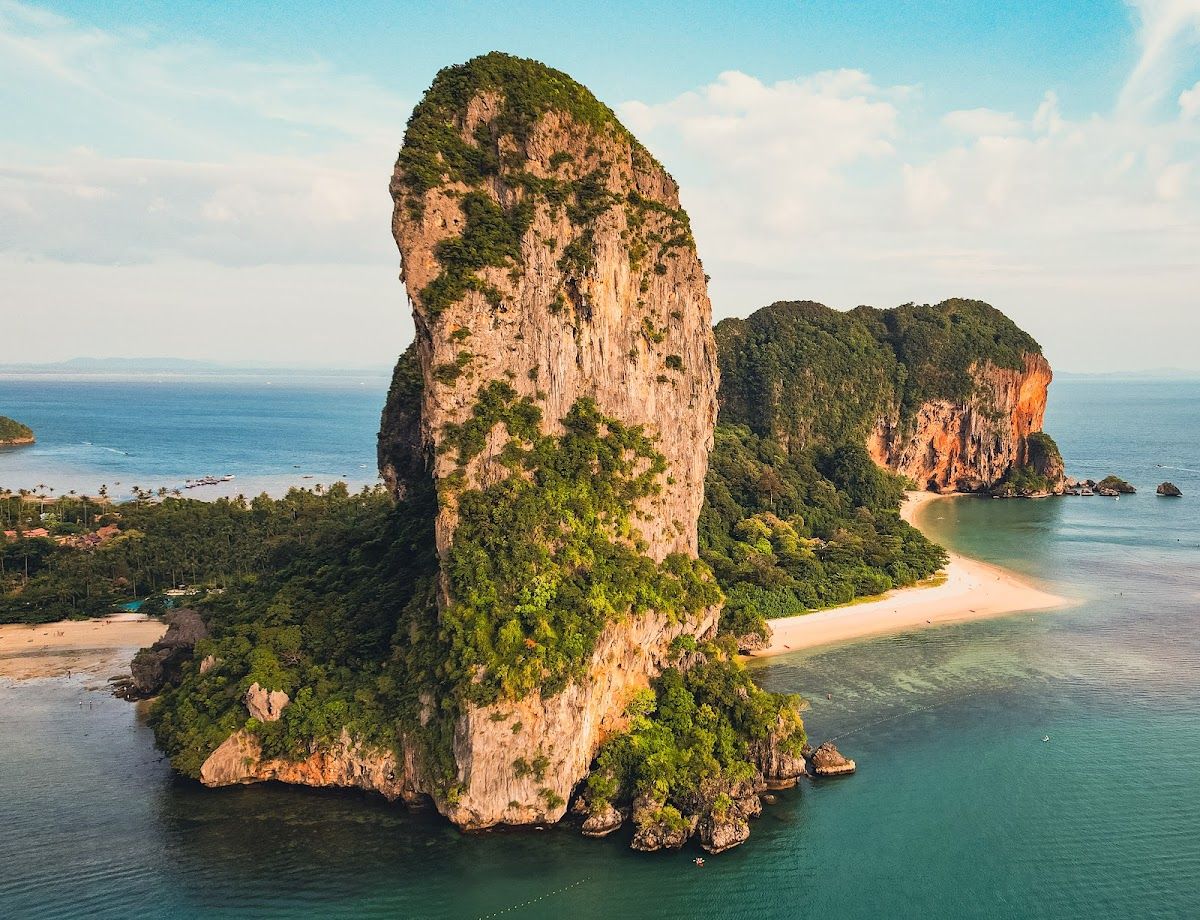
What the beach is actually good for: the beachfront promenade at sunset, a cheap beer from one of the plastic-chair restaurants, and booking your longtail to Railay. The west-facing aspect gives decent sunsets, and the view — limestone karsts rising from the sea to the south-west — is genuinely striking.
Set expectations accordingly: you come to Ao Nang for the access and the convenience, not the beach. The good beaches are a ฿100 longtail away. Full rankings and how to reach each one are in the best beaches guide.
Getting around from Ao Nang
This is the reason to stay in Ao Nang. Every major Krabi experience is straightforward to reach.
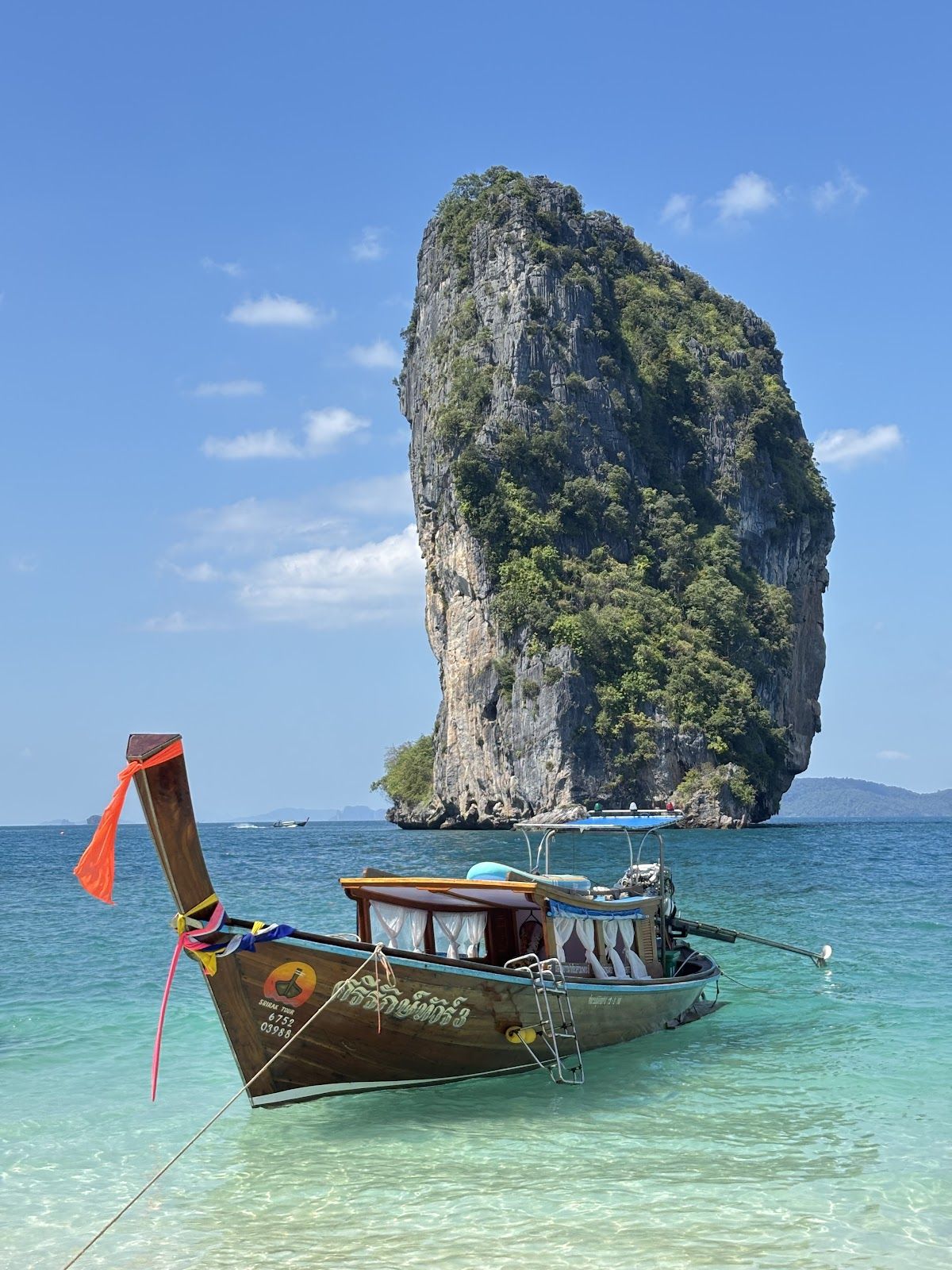
Longtails to Railay leave from the beach at the north end of town. Walk to the sand, check the posted fare board (฿100 each way as of 2026), and wait — boats go when roughly 8 passengers are aboard, which on a busy day takes minutes. The crossing is 10–15 minutes; boats land on Railay West, from where you walk across the peninsula to Phra Nang (a flat 10 minutes). Boats run from around 8am to 6pm; after dark expect a surcharge or private-hire pricing. You’ll wade at both ends (ankle to knee-deep depending on tide), so sandals beat trainers. Full detail in the Railay Beach guide.
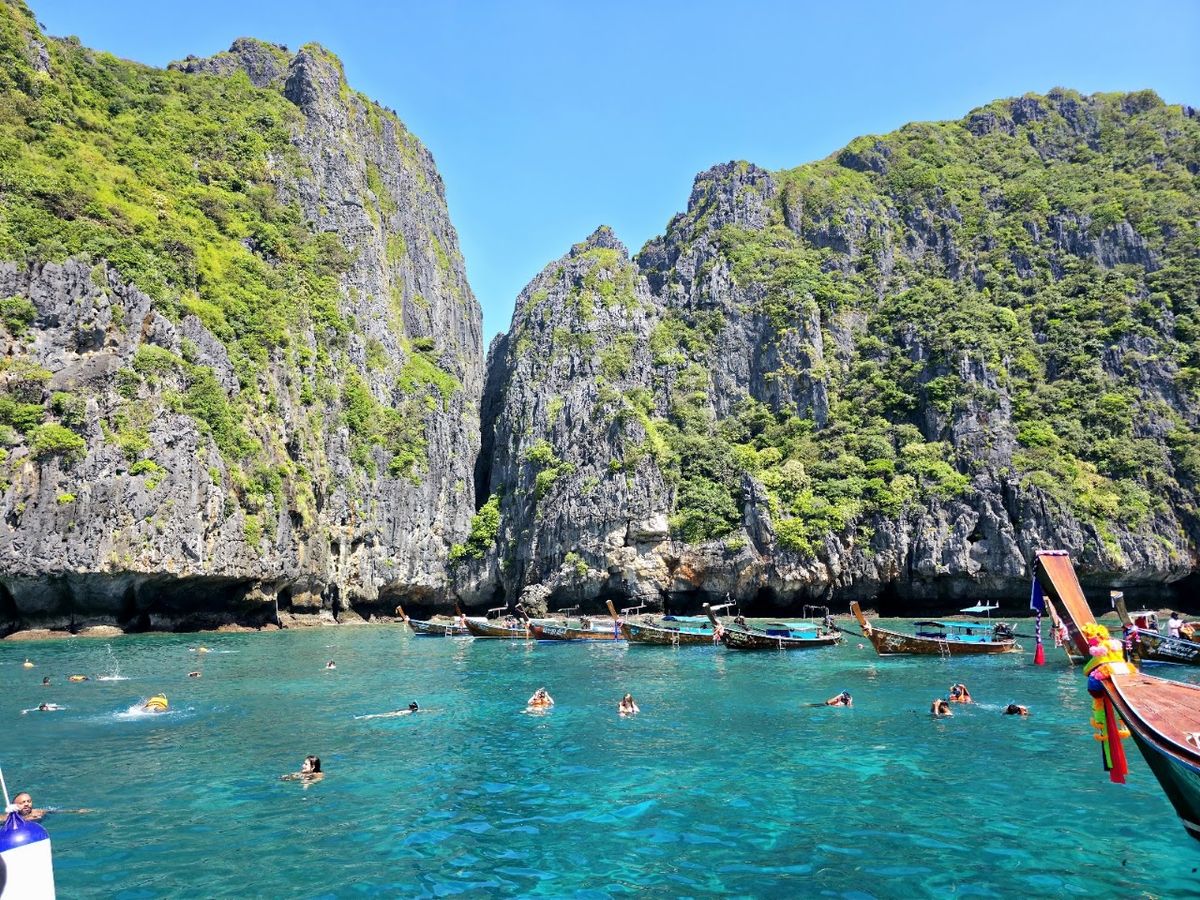
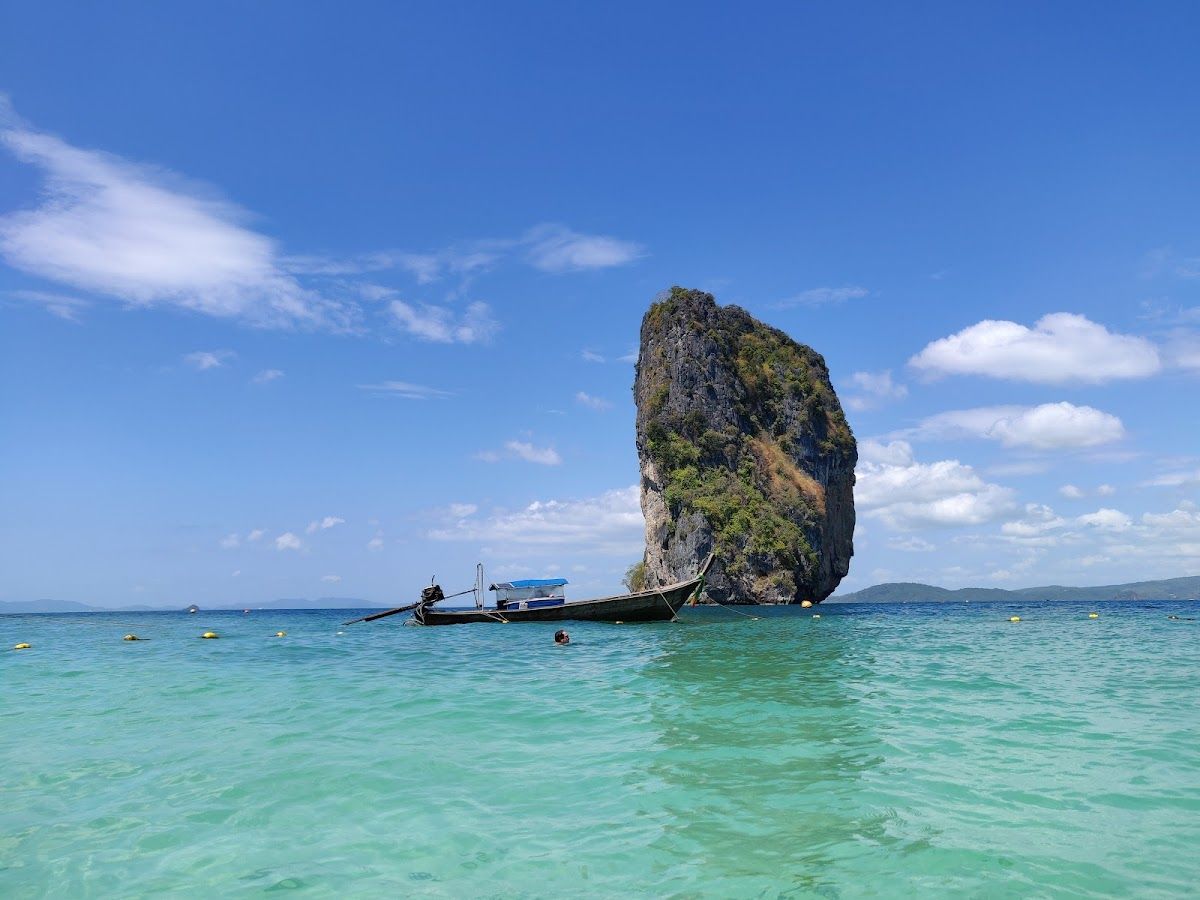
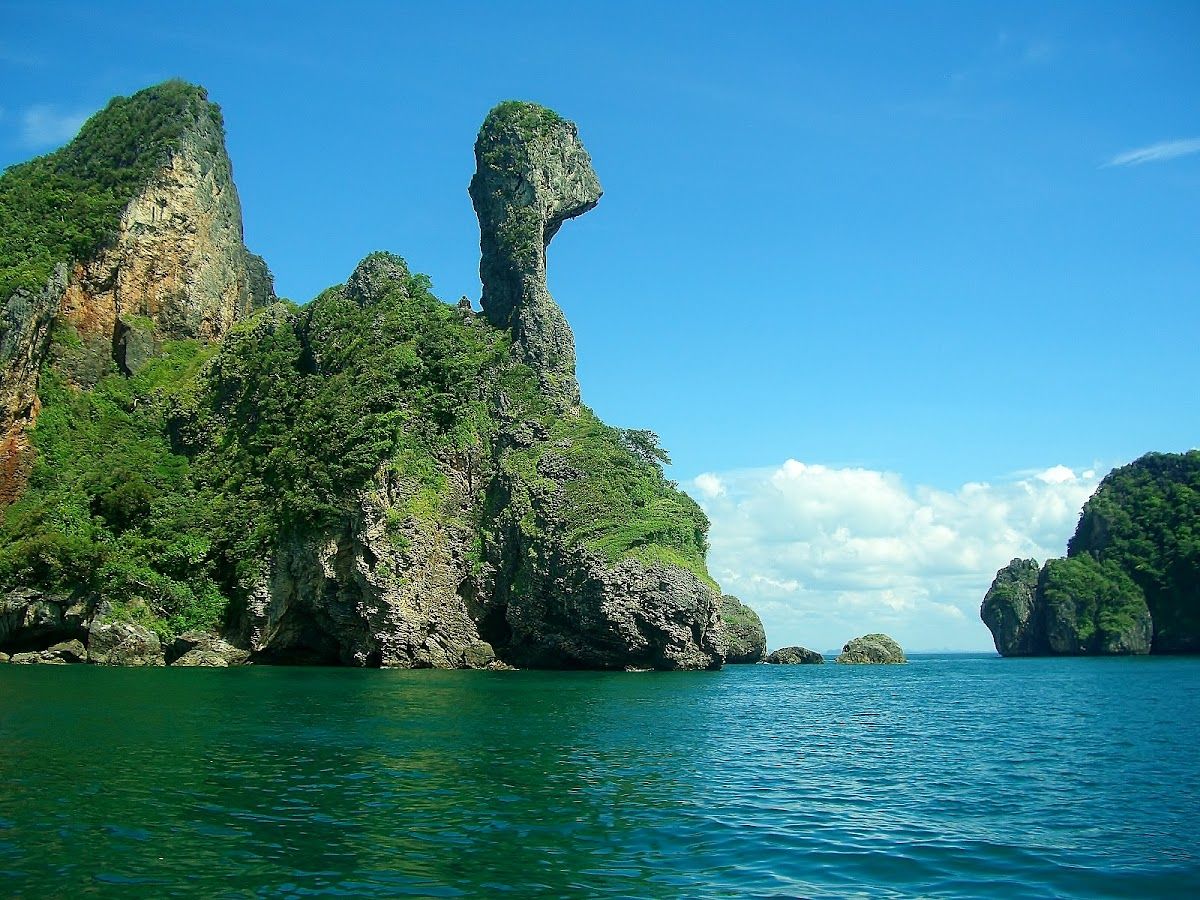
Island tour boats depart from Ao Nang pier or the adjacent Nopparat Thara beach. The Four Islands tour picks up from here, as do Phi Phi day trips, Hong Islands tours and snorkelling charters. You don’t need to book far in advance for most — tour desks on the main strip sell seats up until the morning itself.
Songthaews to Krabi Town run from the main road junction near the beach. Flag one heading east, confirm it’s going to Krabi Town, and the fare is ฿50–60 per person. The ride takes about 30 minutes. Songthaews run during daylight hours and thin out after 6pm; after that you’re looking at a taxi.
Taxis and ride-hailing: Grab operates in Krabi and is cheaper than negotiated taxis for known routes. Meter-less taxis are still common — settle the price before you get in. Useful for late nights and larger groups.
Scooters are a good option for independent travellers. A Honda Click 125 rents for around ฿250–300/day from the shops lining the main strip. Bring a copy of your passport and a cash deposit of ฿500–2,000; never leave the original document with a rental shop. Technically, Thailand requires an International Driving Permit (IDP) or a Thai licence to ride a motorbike — police checkpoints on the road toward Krabi Town do stop tourists, and on-the-spot fines of ฿400–500 are common. Most rental shops say nothing about this; you’re taking the risk knowingly. Scooters are useful for Nopparat Thara, the northern beaches at Klong Muang and Tubkaek, and Tiger Cave Temple — all easy day-trip range. Go slow in Ao Nang itself; the beach road is narrow and congested. The full picture of transport options across Krabi is in the getting around guide.
Food and eating
Ao Nang has the most food choice in Krabi, but the beachfront strip is priced for tourists and often tastes like it. A half-block inland you find straightforward Thai at market rates.
Street stalls and local spots: a plate of pad thai, khao pad (fried rice) or noodles from a stall or small restaurant on the back lanes runs ฿50–80. Don’t expect that on the beachfront promenade — you’re paying for the view there.
Seafood by the kilo: the main strip restaurants display their catch in ice beds outside. Fish runs roughly ฿400–600/kg, tiger prawns ฿600–900/kg, black crab ฿250–500 depending on size. You point, they weigh and cook, you pay at the end. This is where the beachfront is honestly good value — you see what you’re getting before you order, and the quality is usually fresh.
Ao Nang night markets: Landmark is the useful default near Nopparat Thara, with food, proper seating and evening entertainment. The Wednesday and Klong Haeng Saturday markets are smaller weekly options, not reasons to rearrange a short trip. Use the current night-market guide before making the journey.
Krabi Town Night Market: if food is a priority, the 30-minute songthaew ride to Krabi Town’s weekend market (Friday–Sunday, 5pm–10pm, Soi Maharaj 8) is worth it. More local, larger, and the seafood stalls operate at prices that don’t assume a tourist budget. The food guide covers it in more detail.
Breakfast and coffee: most mid-range hotels include a Thai-Western breakfast. The café scene in Ao Nang has improved — a few specialty coffee spots have opened in recent years. The cluster near the beach junction opens from around 7am, which is the right time to grab something before an early boat.
Nightlife and evenings
Ao Nang is the liveliest base in Krabi, though it’s well short of Phuket or Koh Samui. Expect a few options rather than a full night-out scene.
The beachfront strip has bars running from around 6pm — plastic chairs, cheap Chang and a view west over the karsts going orange. Fire shows appear on the beach most dry-season evenings, a staple of the Ao Nang promenade and a decent free spectacle with a drink in hand.
Behind the main road, a lane running parallel about one block inland has bars operating later — pool tables, live music nights, cover bands. Nothing extraordinary, but enough.
Things wind down by 1–2am on most nights. Ao Nang doesn’t have nightlife as a reason to choose it, but it has enough that you don’t feel stranded after dinner. Compared to Railay — where the last day boats leave around 6pm and the peninsula gets very quiet — it’s a different proposition entirely.
Who Ao Nang suits
First-timers to Krabi: everything within walking distance, every type of transport a short walk from the hotel, and enough restaurants and shops to cover any need that comes up. You can change plans without losing half a day. The 3-day itinerary is structured around an Ao Nang base for exactly this reason.
Families with children: pharmacies, 7-Elevens, a wide restaurant range and easy island-tour access make Ao Nang the clear family choice. Railay’s beaches are more beautiful but the boat-only access, limited supplies and higher prices add real friction with kids. The family resorts guide has the best options here.
Island-hoppers: if your Krabi trip is built around day tours — Four Islands, Phi Phi, Hong Islands — all of them depart from the Ao Nang pier area. Basing elsewhere adds a boat leg to every morning departure.
Budget and mid-range travellers: Ao Nang has the widest accommodation supply in Krabi across every price point. Competition keeps prices lower than Railay for equivalent quality.
Who it doesn’t suit: couples after somewhere genuinely beautiful to wake up in — for that, Railay is the right call. Travellers looking for a calm, uncrowded beach on their doorstep should consider Klong Muang or Tubkaek to the north. The full comparison of all four Krabi bases is in the where to stay guide.
Where to stay in Ao Nang
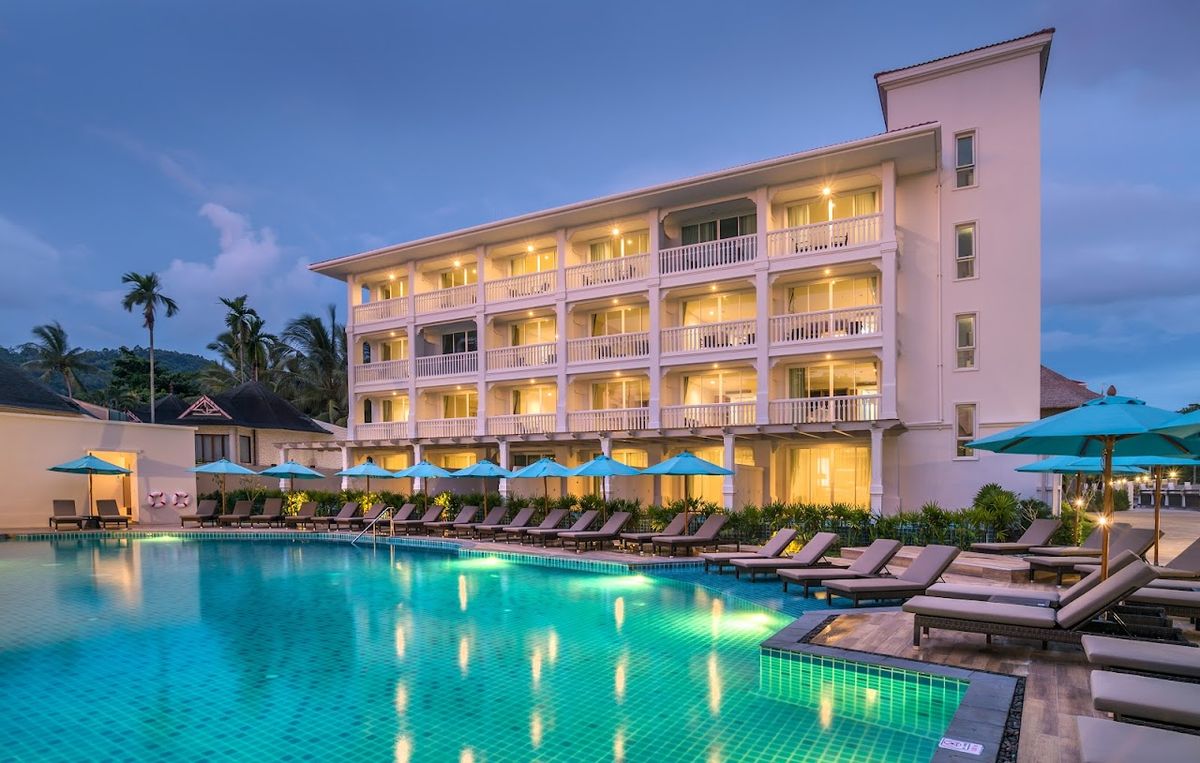
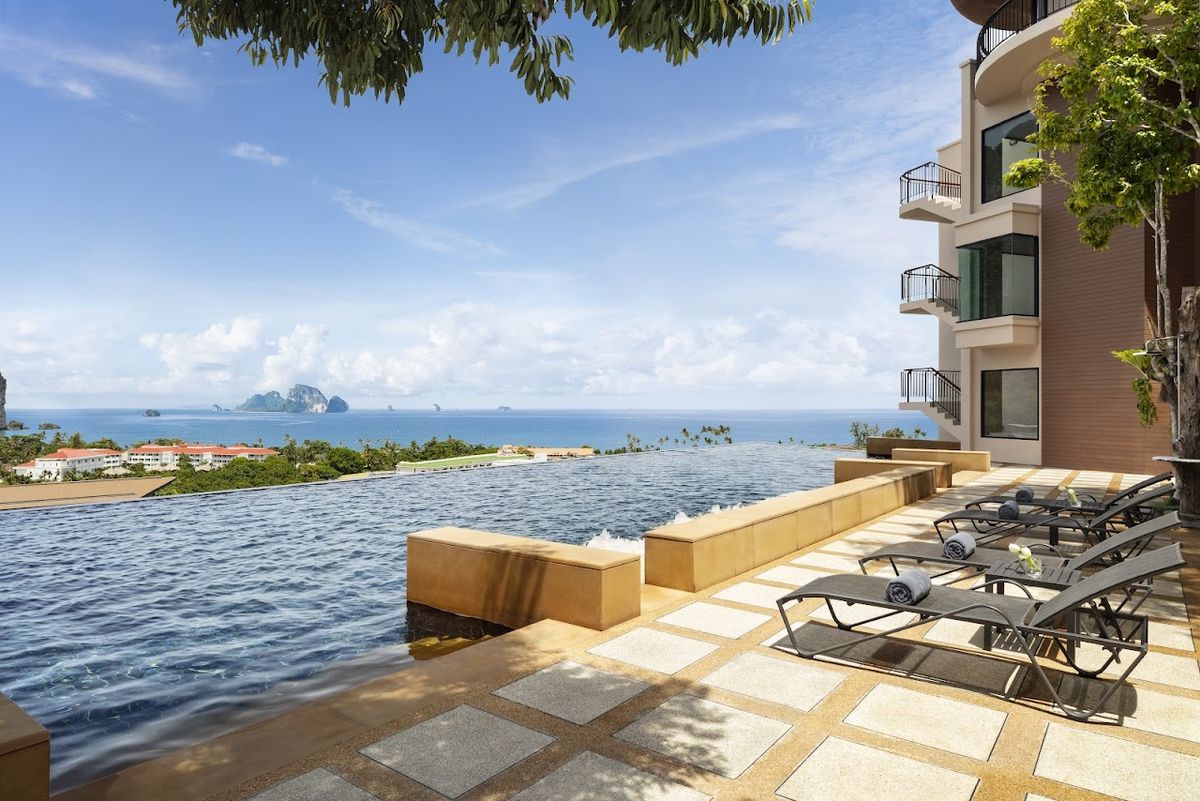
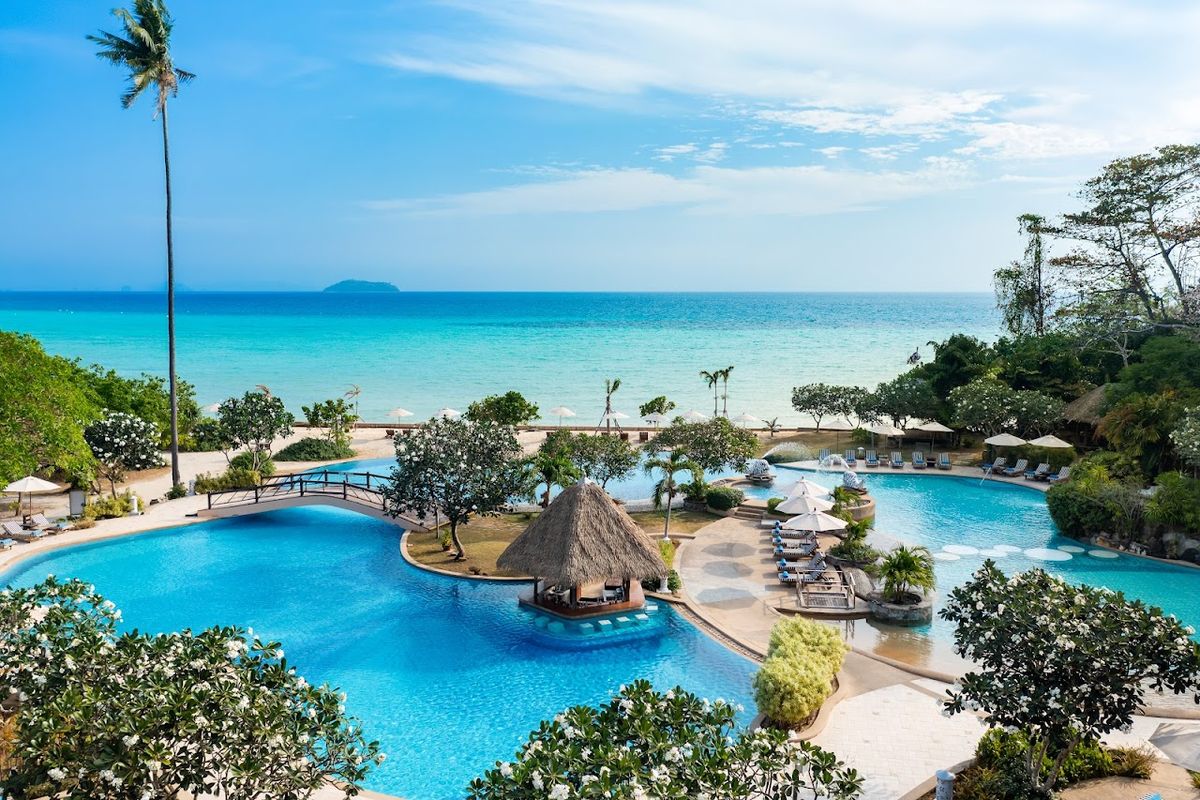
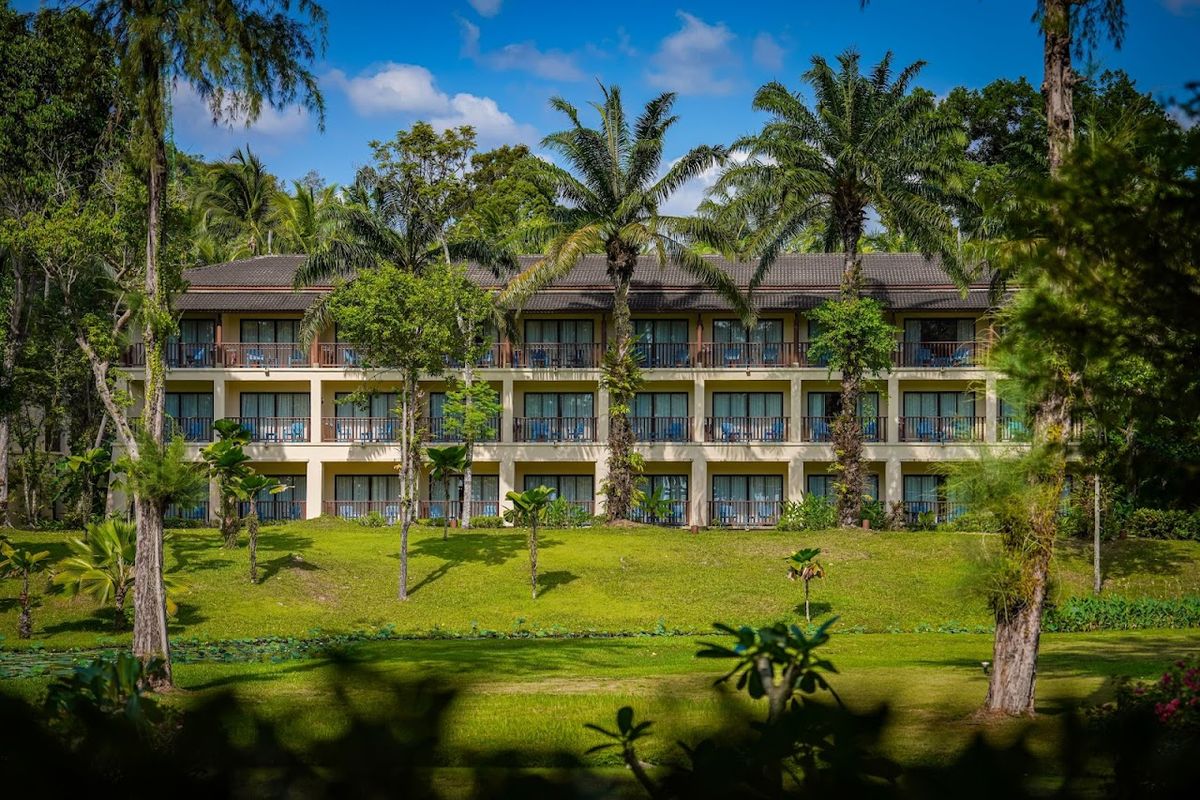
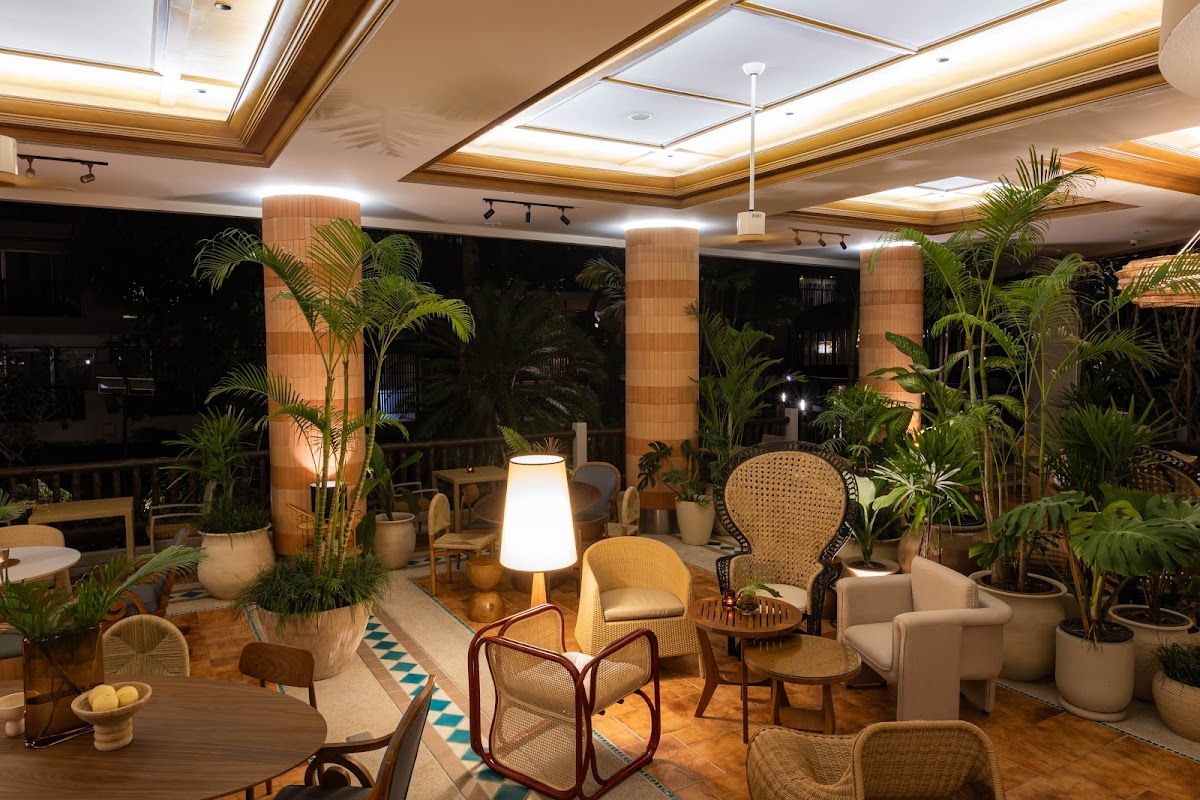
Accommodation in Ao Nang covers every bracket. Guesthouses start from around ฿500–800/night a block or two back from the beach. Mid-range hotels in the ฿1,500–3,500 range are plentiful. Luxury resorts — proper pools, spas and beach access — start from around ฿4,000/night and go well above that.
The useful distinction is proximity to the beach versus price. Rooms right on the beachfront or within 100 metres carry a premium. Rooms 300–500 metres back are often meaningfully cheaper for almost no practical difference in convenience — the pier is still a five-minute walk.
The hotel picks above span the range from midrange to luxury, all verified in the Ao Nang area.
Practical notes
Best time to visit: November to February is the dry season — clear skies, calm seas, full island-tour schedule. March and April are hotter and busier. May to October is the wet season: rain comes in bursts, some boat tours are cancelled on rough days, and prices drop noticeably. Ao Nang functions year-round; the main wet-season impact is on island-hopping reliability. See the best time to visit guide for the full picture.
ATMs: plentiful near the beachfront. Thai ATMs charge a ฿220 foreign-card fee on top of whatever your home bank adds. Withdraw a larger amount less often to minimise the hit.
Cash: everything in Ao Nang runs on Thai baht. USD and euros are exchangeable at the money-changers on the main strip; rates are fair. Bring cash for longtails, songthaews, street food and markets — cards work at bigger restaurants and hotels only.
Water: tap water is not safe to drink. Bottled water costs ฿10–15 for 1.5L. Refill stations outside 7-Elevens charge ฿1–2 per litre.
Dress: vest and shorts are fine everywhere in Ao Nang. Temple visits (Tiger Cave Temple especially) require covered knees and shoulders — carry a sarong or buy one from any beach shop for ฿50.
Internet: most guesthouses and hotels have wi-fi. A Thai SIM with data is cheap and more reliable than hotel wi-fi for a full trip — buy at Krabi Airport (AIS and DTAC desks in arrivals) or from any 7-Eleven.
FAQ
Is Ao Nang good for swimming? Not at the town beach — it’s a longtail harbour. For swimming, take a ฿100 longtail to Railay or Phra Nang (15 minutes). The beaches guide ranks the best options across Krabi.
How do you get from Ao Nang to Railay? Longtail from the north end of the beach. ฿100 each way, 10–15 minutes, no booking needed. Boats leave when roughly 8 passengers gather and run during daylight hours. Wear sandals — you wade at both ends.
How far is Ao Nang from Krabi Town? About 21 km. Songthaew costs ฿50–60 and takes around 30 minutes. Available during daylight from the junction near the beach. Taxis are faster but significantly more expensive.
Is Ao Nang good for families? Yes — it’s the best family base in Krabi. 7-Elevens, pharmacies, a wide restaurant range and easy island-tour access, with no boat leg to start the day. The family resorts guide covers the best hotel options.
What is there to do in Ao Nang in the evening? Beachfront bars from 6pm, fire shows on the sand most evenings in the dry season, and bars one block inland for later nights. For a market, use Landmark as the dependable default; the smaller Wednesday and Saturday markets are worth considering only when their day already fits.
How much do scooters cost in Ao Nang? Around ฿250–300/day for a Honda Click 125. Rental shops line the main strip. Bring a copy of your passport and a cash deposit — never leave the original.